

canada777 casino Plinko
Introduction
When I look at casino titles that seem almost too simple at first glance, Plinko is usually near the top of the list. On the Canada777 casino Plinko page, the concept is immediately clear: a ball drops from the top of the board, bounces through a field of pegs, and lands in a payout slot at the bottom. That is the whole visual idea. But the actual player experience is more layered than that description suggests.
This is exactly why Plinko keeps drawing attention. It strips away the heavy visual packaging of many modern slots and replaces it with a format that feels transparent, fast and easy to read. Yet behind that clean presentation sits a real balance of probability, variance, pace and decision-making. In practice, the game can feel calm, repetitive and controlled on one risk setting, then suddenly tense and swingy on another.
In this review, I want to focus strictly on what Canada777 casino Plinko really offers as a game. Not as a trend, not as a marketing label, and not as a general casino attraction. The important question is simpler: what happens when you actually play it, what should you understand before launching it, and who is likely to enjoy this format over classic slots or table canada777 Casino games details for players comparing casino options?
What Plinko is and why it attracts so much attention
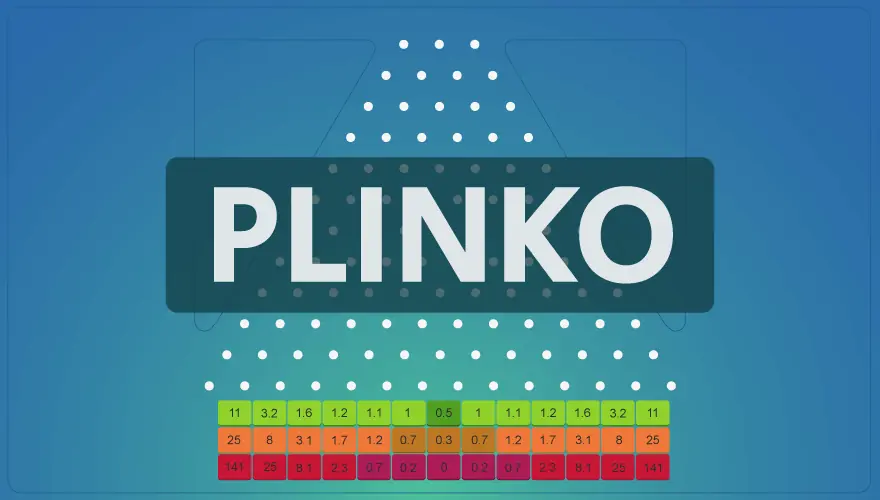
Plinko is a chance-based casino game built around a vertical board filled with pins. The player chooses a stake, often selects the number of rows and a risk level, then releases a ball. As it falls, the ball deflects left and right until it lands in one of several multiplier slots. The final multiplier determines the result of that round.
The reason this format stands out is not only its visual simplicity. It is the combination of three things:
- Immediate readability. Even a first-time player understands the core action within seconds.
- Visible randomness. The path of the ball creates a direct, almost physical sense of uncertainty.
- Fast emotional feedback. Every drop resolves quickly, so the game creates momentum without requiring long feature cycles.
On the Canada777 casino version of Plinko, this matters because the title does not need a complex paytable narrative to hold attention. The board itself becomes the attraction. Players are not waiting for scatter symbols, bonus rounds or expanding reels. They are watching probability play out in a compact, visual way.
One of the more interesting things about Plinko is that it feels honest and deceptive at the same time. Honest, because the interface clearly shows where the higher multipliers sit and where the safer landing zones are. Deceptive, because that clarity can make the outcome feel more manageable than it really is. The board looks understandable, but the short path between a modest return and a dead drop can still be brutal in a high-risk setup.
How the Plinko mechanic actually works in practice
At a mechanical level, Plinko is built on repeated binary deflections. As the ball hits each peg, it shifts direction. Over many rounds, this creates a distribution where central landing zones appear more often, while edge slots are much rarer. That basic logic is essential to understanding the game.
Most versions, including the kind of Plinko page players expect to see at Canada777 casino, let you control several key parameters:
- bet size;
- risk level;
- board height or number of rows;
- sometimes autoplay or rapid-drop mode.
Each of these settings changes the feel of the session. The most important is usually the risk level. This does not remove randomness, but it reshapes the payout distribution. Lower-risk setups tend to produce more frequent small returns clustered around the center. Higher-risk setups shift more value toward rare edge outcomes, which means a session can become much more uneven. Table game fans will get more out of this review after reading canada777 Casino legality overview for players.
The number of rows also matters. A taller board gives the ball more chances to deflect, which generally broadens the spread of possible endings. In simple terms, more rows often mean more dramatic separation between common low multipliers and rare high multipliers.
| Setting | What it changes | What it means for the player |
|---|---|---|
| Bet size | Monetary value of each drop | Directly affects session cost and emotional pressure |
| Risk level | Payout distribution across the board | Changes how often small returns appear and how rare top multipliers become |
| Rows | Length and complexity of the ball path | Influences spread, rhythm and variance perception |
| Autoplay | Speed and repetition of rounds | Can make losses accumulate faster if used carelessly |
What I find important here is that Plinko does not ask the player to decode hidden systems. The logic is visible. But visible does not mean intuitive over a long session. A player may watch several center hits in a row and start feeling that edge multipliers are “due.” That is where misunderstanding begins. Each drop is still governed by independent probability within the structure of the chosen board.
Why the game feels engaging and how its tempo shapes the session
Plinko has a very specific rhythm. It is faster than most table games in terms of round resolution, but it often feels more tactile than a standard quick-spin slot. That combination gives it a distinct place among casino games.
The pacing works because every round contains a tiny suspense arc. The drop begins, the ball clips through the pegs, and for a second the player can track a path that seems meaningful. Sometimes the ball appears to drift toward a strong multiplier, only to bounce away at the last moment. That small sequence creates tension far more efficiently than many games with much heavier animation.
Here is a practical point that players often underestimate: Plinko can feel slower emotionally than it is mathematically. A round resolves in moments, but because the eye follows the ball, the player experiences each result as an event. This makes the game feel interactive even when the outcome is fully chance-driven.
That is one reason the title has become so noticeable. It offers visual participation without requiring strategic skill. You are not making card decisions or managing paylines. You are choosing a setup, then watching the consequences unfold in a way that feels immediate and personal.
A second memorable observation: in many sessions, Plinko creates more tension through near-misses than through actual top results. A ball sliding close to a high multiplier and then dropping into a modest slot can have more emotional impact than a routine small return on a slot reel. For some players, that is exciting. For others, it becomes mentally draining surprisingly quickly.
How risky Plinko can be and who this format suits best
Plinko can be mild or aggressive depending on the configuration. That is why broad statements about the game are often misleading. Saying “Plinko is high variance” is only partly true. In many versions, low-risk settings produce a steadier stream of modest outcomes. But if the player moves to higher-risk modes and larger boards, the session can become sharply uneven.
The key issue is not just whether large multipliers exist. It is how much of the game’s theoretical value is concentrated in those rare outcomes. The more value pushed toward the edges, the more the player has to tolerate long stretches of underwhelming returns.
In practical terms, Plinko tends to suit players who:
- prefer short, clear rounds over layered bonus systems;
- like seeing probability expressed visually;
- understand that a simple interface does not mean low financial swing;
- are comfortable adjusting risk settings rather than chasing one dramatic mode all session.
It may be a weaker fit for players who want narrative progression, unlockable features, character themes or the kind of structured anticipation that classic slots provide through free spins and bonus rounds. Plinko is more stripped down. If that visual minimalism feels elegant to one player, it may feel repetitive to another.
A third useful observation from actual play behavior: people often move into higher-risk Plinko not because they misunderstand the board, but because the lower-risk mode can feel “too correct.” It returns small results often enough to stay readable, yet not dramatic enough to satisfy players chasing standout moments. That shift in expectation is where many sessions become more volatile than intended.
What players should understand about probability, expectation and outcomes
Before playing Canada777 casino Plinko, it is worth resetting one common assumption: watching the ball bounce does not make the outcome predictable. The movement looks physical, and that visual realism can create the illusion that the player is observing patterns. In reality, what matters is the probability model behind the board and the payout mapping at the bottom.
The center slots usually appear more often because there are more possible paths leading toward them. The edge multipliers are rarer because far fewer paths end there. This is the core mathematical shape of Plinko.
That leads to several practical conclusions:
- frequent central hits do not indicate that edge outcomes are “building up”;
- a streak of poor drops does not guarantee a correction in the next few rounds;
- high multipliers are attractive precisely because they are uncommon;
- session results can diverge heavily from expectations in the short term.
For the player, this means bankroll management matters more than the clean interface suggests. A simple board can hide a very expensive session if stake size and risk level are set too aggressively. Because rounds resolve quickly, losses can stack before the player feels the full cost.
Another point I would stress is that Plinko often compresses emotional variance. You may get many small returns, but if they sit below break-even, the session can still drift downward steadily. This is different from the experience of a slot where long dead stretches are interrupted by obvious feature triggers. In Plinko, the action is constant, so it is easier to mistake activity for progress.
How Plinko differs from slots and other casino games
Plinko is often grouped loosely with slots because both are chance-led digital casino products, but the comparison only goes so far. The player experience is structurally different.
| Format | Main player focus | Session feel | Typical source of tension |
|---|---|---|---|
| Plinko | Ball path and landing slot | Fast, visual, repetitive, highly readable | Path uncertainty and rare edge multipliers |
| Classic slots | Symbol combinations and feature triggers | Theme-driven, layered, often less transparent | Bonus anticipation, reel stops, feature entry |
| Roulette | Single result on a wheel | Direct and event-based | One-number or sector prediction |
| Crash-style games | Cash-out timing | Decision-led and reactive | Choosing when to exit |
The major difference from slots is that Plinko removes most of the decorative structure. There are usually no reels, no symbol hierarchy, no free-spin storytelling and no evolving bonus state. What remains is pure distribution and pacing. For some players, that makes the experience clearer and more honest. For others, it removes the variety that keeps longer sessions interesting.
Compared with roulette, Plinko feels less binary because the ball travels through visible intermediate steps. Compared with crash games, it gives less direct control because there is no timing decision after the round starts. Once the ball drops, the player is committed to the result.
This is why I see Plinko as a bridge format. It sits between passive reel-based entertainment and stripped-down probability play. That middle ground is a big part of its appeal.
Practical strengths and weaker points of the format
Canada777 casino Plinko works best when judged on what the format is actually designed to do, not on what it is missing compared with other categories. Its strengths are real, but so are its limitations.
| Strong side | Why it matters | Possible downside |
|---|---|---|
| Simple interface | Easy for new players to understand quickly | Can create false confidence about long-term outcomes |
| Fast resolution | Keeps sessions active and engaging | Can accelerate spending if stake control is weak |
| Visible payout structure | Makes risk distribution easier to grasp | Rare high multipliers may attract unrealistic expectations |
| Adjustable risk modes | Lets players shape the session style | High-risk settings can turn a casual session into a very swingy one |
The strongest side of Plinko, in my view, is clarity. It tells the player what kind of experience it is offering. You are not decoding a complicated bonus engine or waiting for hidden conditions to line up. That makes the title approachable.
The main weakness is repetition. Because the structure is intentionally minimal, the game relies heavily on the emotional pull of each drop. If that tension stops working for a player, the format can flatten out fast. There is not much thematic variety to fall back on.
I would also call out a more subtle limitation: Plinko can encourage overconfidence through transparency. The board feels understandable, so some players start treating it as more manageable than a slot. But understanding where the rare multipliers are located is not the same as having practical control over reaching them.
What to check before starting a Plinko session
Before launching Plinko at Canada777 casino, I would recommend paying attention to a few concrete points rather than jumping in based on the game’s clean look. To understand the wagering rules behind each offer, open top canada777 Casino no deposit bonus codes next.
- Review the risk setting first. This changes the entire personality of the session.
- Keep stake size modest until the rhythm is clear. Fast rounds can distort spending perception.
- Check whether row count is adjustable. More rows can widen the spread of outcomes.
- Be careful with autoplay. It removes the pause that often prevents impulsive overextension.
- Decide what kind of session you want. Steadier low-risk repetition and high-risk multiplier hunting are very different experiences.
If a demo mode is available, it is worth using briefly. Not because demo play replicates emotional pressure perfectly, but because it helps the player understand how different settings alter the board’s behavior. In Plinko, that knowledge is more useful than many people expect.
The most practical mindset is to treat the game as a probability-driven drop simulator with adjustable variance, not as a skill-based challenge and not as a slot replacement in the traditional sense. Once that is clear, expectations become much healthier. Those comparing loyalty perks can weigh this section against canada777 Casino VIP program guide for real money casino players.
Final verdict on Canada777 casino Plinko
Canada777 casino Plinko offers a format that is visually simple, mechanically transparent and emotionally sharper than it first appears. The game’s real appeal comes from the contrast between what you see and what you feel: a clean board, a single falling ball, and a session that can range from steady and almost meditative to tense and highly uneven depending on the chosen setup.
Its key strengths are easy to define. Plinko is accessible, quick to understand, and strong at turning pure probability into something the player can follow in real time. It avoids the clutter of many slot-style products and gives immediate feedback with every drop. For players who value clarity and pace, that is a serious advantage.
The caution point is just as important. The interface can make the game look softer than it is. Higher-risk modes, rapid rounds and rare top multipliers can create a much more volatile session than casual players expect. The simplicity of the board should never be confused with simplicity of outcomes.
So, is Canada 777 casino Plinko worth trying? Yes, if you want a casino game built around visible randomness, short suspense cycles and adjustable session style. If you prefer deep bonus structures, narrative slot design or games with more active decision-making, another format may fit better. Plinko does one thing very clearly: it turns chance into a compact, watchable event. For the right player, that is exactly the point.
FAQ
What should be checked before pressing Spin on the Plinko game?
Review the bet size, the selected drop field, and the current balance shown in the game lobby. If a bonus mode is active, confirm the wager and available features before starting the next ball.
How does the Plinko ball drop work in real-money play?
Each round releases a ball that bounces through the board and lands in one of the outcome slots. The slot it ends in determines the multiplier applied to the round’s wager. Game results are resolved immediately after the ball finishes its path.
Is there a demo mode for Plinko, and what does it change?
Demo mode lets players practice the ball drops and understand multipliers using virtual funds. It keeps the mechanics the same, but it does not connect to real-money withdrawals or account payouts.
Can the Plinko game be played on mobile, and is it easier with the app?
Plinko is available for mobile play through the casino interface, and the layout is optimized for touch controls. A mobile casino app may also be used if the device supports it, but the core gameplay stays the same.
What common beginner mistake leads to confusion with Plinko multipliers?
Placing a bet without noticing the selected drop field or assuming the multiplier carries over between rounds can create surprises. Each round resolves independently, so payout depends on the exact outcome slot reached by that ball. It helps to start with a smaller wager to understand how frequently different multipliers appear.